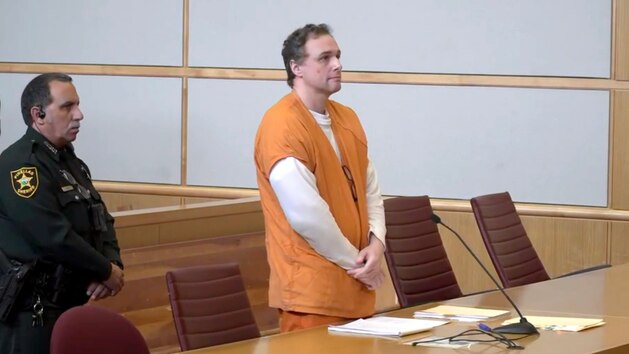
Tomasz Kosowski is seen at his sentencing hearing in Clearwater, Florida, Nov. 20, 2026. (Pool via ABC News)
A Florida judge sentenced a plastic surgeon to death for murdering a lawyer whose body was never found.
Tomasz Kosowski was found guilty of first-degree murder in September for the death of 41-year-old Steven Cozzi, who disappeared in March 2023.
Judge Joseph Bulone reached the verdict after the defendant, who represented himself in the murder trial, waived his right to a jury trial. The judge also found that the murder was done for financial gain and committed in a "cold, calculated and premeditated manner without any pretense of moral or legal justification," aggravating factors that made the defendant eligible for the death penalty.
During Friday's sentencing hearing, Bulone said the two aggravating factors outweighed several mitigating circumstances, in particular that the murder was "cold, calculated and premeditated."
"Therefore, the court concludes that the defendant, under the laws of the state of Florida, has forfeited his right to live," Bulone said. "Accordingly, it is ordered and adjudged that the defendant Tomasz Kosowski is sentenced to death for the murder of Steven Cozzi."
Kosowski will be turned over to the Florida Department of Corrections and appointed a public defender if he chooses to appeal, the judge said.
Prosecutors said Kosowski had a "malicious and personal obsession" with Cozzi, who was representing defendants sued by Kosowski when he went missing from his law firm, and "methodically and systematically" planned the murder.
Kosowskidid not call any witnesses or testify in his own defense during the seven-day murder trial.
Prosecutors argued that even though Cozzi's body was never found, the evidence showed that he is dead, and that Kosowski murdered him.
"The bottom line is the overwhelming totality of the evidence in this case demonstrates that he had the obsession, and he prepared, and he had a plan, and he effectuated that plan, and murdered him on March 21, 2023," Assistant State Attorney Nathan Vonderheide said during his closing argument during the trial.
That evidence, Vonderheide said, included Cozzi's blood found in his law office's bathroom, where he said a "violent event" occurred, and in Kosowski's truck. He said Kosowski was seen on surveillance video entering the office with a Gorilla cart box on the day Cozzi went missing, and then leaving hours later with a "very heavy" wagon.
Prosecutors alleged that Kosowski then disposed of Cozzi's body in a dumpster, which went to a landfill.
During his closing, Kosowski argued that it was "impossible" for him to have committed the crime as alleged by the state and questioned whether Cozzi died on March 21, 2023, saying there were several transactions on his credit card in the weeks following that date.
"Reasonable doubt exists in droves in this case," he said.
Following the guilty verdict, Cozzi's parents and husband spoke to the pain of not being able to lay him to rest.
"The most unbearable part is that we were never able to bring Steven home," his husband, Michael Montgomery, told the court. "I cannot describe the horrors this has brought me, and all of Steven's loved ones. It brings me more anger than I can put in words."
Montgomery said his husband is "not defined by the way his life ended."
"He is defined by the life he actually lived, by the family who loved him, by his work, by the books he read, by the miles he ran, by the meals he cooked, by the ridiculous movies, by our trips to the mountains, by his passion for the law, by his gentleness, by his strength, by the many people who loved him," he said.
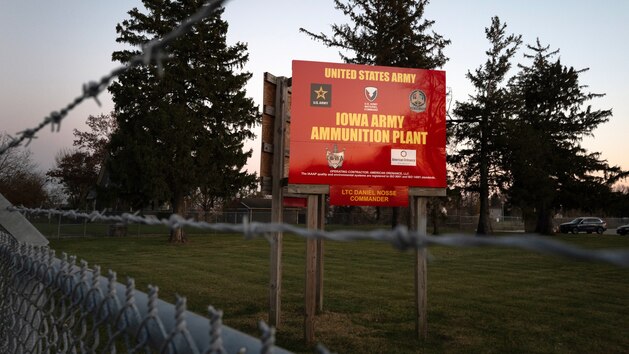
A sign identifying the facility sits inside a fence surrounding the Iowa Army Ammunition Plant on Nov. 19, 2026, in Middletown, Iowa. (Scott Olson/Getty Images)
A federal appeals court has temporarily blocked an emergency permit allowing the U.S. Army to conduct a controlled detonation of nearly five tons of lead azide at a military ammunitions plant in Iowa.
In an order filed late Thursday night, the Eighth Circuit Court of Appeals granted an administrative stay of the permit, issued by the Environmental Protection Agency, while the court considers an emergency request from two Iowa environmental groups to formally halt the detonation, which the Army postponed until early next week amid public concern.
The temporary stay pauses the emergency permit until the appeals court rules on the request from the Iowa Environmental Council and Sierra Club Iowa Chapter for a longer-term halt.
The environmental groups asked the federal appeals court to halt the plan in an emergency motion filed earlier Thursday -- alleging that the EPA approved the permit for the detonations without adequately considering the potential health and environmental consequences or fully evaluating alternatives -- as some officials, including Iowa Sen.-elect Josh Turek and Gov.-elect Rob Sand, also expressed concerns about the Army's plan, how it was communicated to the public and risk of potential lead exposure.
Two rapid, controlled detonations were initially scheduled to take place at the Middletown plant midday Friday to safely dispose of degraded lead azide, according to the U.S. Army.
Army officials announced Thursday that the detonation of nearly 10,000 pounds of lead azide would be pushed until Monday.
"Public communication is essential to public trust. Therefore, the Army will continue to actively engage with state and local officials throughout the region to distribute accurate, up-to-date information," Army Secretary Adam Telle said in a post on social media announcing the postponement.
Telle said Monday is the "latest possible moment prior to a forecasted temperature drop, which would risk further destabilization of the material."
Lead azide is the primary explosive used to initiate munitions. The controlled detonation is to dispose of degraded lead azide, which is highly sensitive and extremely unstable, the Army said. Due to the risks of accidental detonation in packing and transporting it, "safely destroying it in place is the only responsible option," the Army said.
According to the EPA, the "recrystallization of the stored lead azide has increased the material's sensitivity to friction and shock, and disturbing the containers of lead azide could create an unacceptable risk of unintentional detonation."
The Department of Health and Human Services, the EPA and the Army said Friday the agencies are taking "extreme mitigation measures" to ensure the safety of the detonation, which the Army said will cause a dust plume containing some lead, loud noises and ground vibrations and possibly broken windows.
"The entire interagency is working together to ensure that the controlled detonation in Middletown, Iowa is conducted in the safest fashion possible," the agencies said in a joint statement released Friday.
The statement said officials had been preparing for the event since March and "agencies involved are prepared to take the most extreme mitigation measures available to ensure there is no risk to the public and any disruptions are minimized."
"The entire Trump administration will continue to engage with state and local officials, as well as the broader community, to keep all apprised of updates as they arise," the statement continued.
In their emergency motion seeking to halt the detonation, the Iowa Environmental Council and Sierra Club argued that the detonation could spread lead dust across a large area, potentially reaching communities more than 100 miles from the plant. The Army's latest modeling projects that lead dust could settle across an area approximately 25 miles long and 5 miles wide, including homes and waterways, according to the filing. The groups further argue that people, livestock and wildlife could also continue to face exposures to lead once it settles into the ground.
The filing also questioned the Army and EPA's handling of public notification, alleging that some of the potentially impacted communities were not given direct or timely notice.
When reached for comment on the emergency motion, the EPA referred ABC News to the joint statement released on Friday. The EPA has not yet filed a response to the motion.
An alleged train robbery crew is accused of burglarizing dozens of trains and stealing more than $22 million worth of cargo, including thousands of pairs of Nike sneakers, according to federal prosecutors in Los Angeles.
Fourteen people face federal charges in connection with the alleged cargo theft conspiracy, prosecutors announced Thursday.
The 17-count indictment follows a more than year-long investigation into the alleged train heist ring, which prosecutors said involved disabling and breaking into cargo trains, moving the stolen goods to stash houses and reselling them on the black market.
"The scale of the theft is staggering," First Assistant United States Attorney Bill Essayli said in a statement.
Prosecutors allege that the crew stole more than $22.5 million in merchandise -- including Nike and Hoka sneakers, Milwaukee tools and JBL electronics -- from at least 36 freight trains across Southern California from February 2024 to August 2026.
The crew was allegedly led by 21-year-old Nathan Angel, who, along with his father and two uncles, are among those indicted, according to prosecutors. It is unclear if Angel has an attorney at this time.
The crew allegedly targeted "high-value trains" and forced them to stop on the tracks by cutting air hoses, according to the indictment. The filing included photos and stills of some of the defendants allegedly breaking into and on trains, as well as photos allegedly taken by some defendants showing boxes of merchandise and stacks of cash.
As part of the alleged conspiracy, the trains would be disabled at pre-determined locations along the tracks, where some defendants are accused of helping load the stolen cargo into trucks and vans and transporting them to stash houses, according to the indictment.
Several defendants are accused of helping sell the merchandise and receiving cash or wire transfers, according to the indictment. One unidentified company allegedly paid $1,081,493 for thousands of pairs of stolen Nike sneakers and other stolen items from May 2025 to October 2025, according to the indictment.
The defendants ranged in age from 21 to 38 and live in the Los Angeles area, according to prosecutors. All have been charged with one count of conspiracy, while some face additional charges, including theft of interstate railroad cargo, possession or receipt of stolen interstate railroad cargo, and violence against railroad carriers, according to the indictment.
The defendants were set to be arraigned Thursday afternoon in Los Angeles federal court, prosecutors said. The conspiracy count carries a maximum sentence of five years in federal prison if convicted, while the violence against railroad cars count carries up to life in prison.
The alleged theft occurred on railroad tracks in Pico Rivera, Fullerton and other locations in Southern California, prosecutors said.
Prosecutors noted that shipping containers with Nike sneakers and other products often enter the area via the Ports of Los Angeles and Long Beach, where they are loaded onto trains for transport throughout the U.S. Many of the burglarized shipments were bound for retailers and distribution centers outside of California, according to the indictment.
View of a beach with palm trees in Puerto Viejo de Talamanca, Costa Rica. (Tiago_fernandez/Getty Images)
Two people have been arrested in connection with the February death in Costa Rica of American surfer Kurt Van Dyke, who was found stabbed repeatedly and strangled in a home, the Judicial Police of Costa Rica told ABC News on Thursday.
One of the suspects arrested in the alleged homicide was Van Dyke's girlfriend, who was initially considered a victim in the Valentine's Day incident in which the 66-year-old Van Dyke was killed, police said.
Van Dyke's 31-year-old girlfriend and a 34-year-old man were arrested during raids that occurred last week in the Costa Rican cities of Pocora and Astúa Pirí, police told ABC News.
The two suspects were taken into custody in connection with Van Dyke's Feb. 14 death at an apartment in Puerto Viejo de Talamanca, about 100 miles east of the capital of San Jose, according to police. As of Thursday, the suspects remained in jail but have not yet been charged, police said.
The suspects have been ordered to remain in custody for six months as the investigation continues and investigators search for additional suspects, police said.
Investigators alleged the suspects planned the deadly attack to obtain access to Van Dyke's credit cards, police told ABC News. When they didn’t succeed, the suspects allegedly tortured and killed Van Dyke, police said.
The incident was initially reported as a home invasion robbery, police said, adding that both Van Dyke and his girlfriend were bound with zip ties. The girlfriend sustained minor injuries in the incident, and her car was stolen in an apparent attempt to allegedly cover up her involvement in Van Dyke's death, police said on Thursday.
Van Dyke was found strangled and stabbed multiple times, according to statements police released in February. His body was discovered under a bed with a sheet over his face, police said.
Van Dyke, originally from Santa Cruz, California, was a long-time resident of Costa Rica, according to Surfer.com. Nicknamed "King," Van Dyke was a member of a pioneering Northern California surfing family, according to the site.
Xavier Taylor, a New Jersey 12-year-old baseball player, has died. (WPVI)
A young baseball player in New Jersey, 12-year-old Xavier Taylor, has died nearly six months after he was struck by a baseball before a game, according to his New Jersey township.
"It is with profound sadness and heavy hearts that we, the Mayor and Township Council of Maple Shade, join our community in mourning the passing of Xavier Taylor, a beloved young baseball player whose courage and strength touched the hearts of so many," read a message from Maple Shade mayor and township council on Thursday.
The news was also shared by the All Things Foundation, co-chaired by Xavier Taylor's father Gregory Taylor, according to the foundation's social media.
According to WPVI, Taylor has been hospitalized for almost six months since he was accidentally hit by a baseball before a game.
"He's in extremely critical condition, currently on a ventilator," his dad told ABC News Philadelphia affiliate WPVI earlier this year.
In a show of support over the summer, the Philadelphia skyline, the Ben Franklin Bridge and other local landmarks lit up blue for an evening in June in support of Taylor's fight, according to the outlet.
"His story became far bigger than one family. It became a movement that the Lord trusted the Taylor family to carry," read the post from the foundation on Wednesday.
The message continued, "Across the nation, people united in faith. Homes lit up with blue lights for hope. Baseball bats rested on front porches as symbols of hope. Churches gathered. Communities knelt. Millions believed together, declaring that our God is able. And He is."
Maple Shade Township in New Jersey called the loss of Xavier Taylor "an unimaginable heartbreak."
"While Xavier's life was far too short, his impact on our community will be everlasting. He will forever be a part of Maple Shade's story, and his memory will remain in our hearts," the township wrote.
A Georgia woman is facing murder charges after two of her children died in a house fire after she allegedly left them home alone without adult supervision, according to police.
Taneika Lashae Sirmans, 37, has been charged with two counts of second-degree murder and three counts of second-degree cruelty to children, the Valdosta Police Department announced on Wednesday.
Detectives said Sirmans left her three children alone during the early morning hours to go to work. Several hours after she left, a fire started in the kitchen, police said.
The third child left alone in the home is receiving treatment in Atlanta and is in stable condition, according to police.
Numerous emergency personnel responded to the house fire on Oct. 25 to find flames coming from the roof, according to police.
Three children, all under the age of 10, were pulled out of the home by firefighters, police said.
All three children were unresponsive and life-saving measures were attempted on them as they were transported to the hospital, police said.
Two of the children died of possible smoke inhalation and were pronounced dead at the hospital, according to police. The third child was airlifted to a hospital in Atlanta, police said.
"This is such a heartbreaking and tragic incident that could have been prevented," Valdosta Police Chief Leslie Manahan said in a statement.
"This tragedy has not only had a devastating impact on the families involved and our community, but it also affects our first responders and medical personnel who responded to the scene or were working in the hospital that morning. My thoughts are with everyone who was affected, and I continue to pray for the child who is still recovering, whose life has changed forever. No child should ever be placed in any situation where their safety and lives are left to chance," Manahan said.
Sirmans was arrested on Nov. 9 and taken to Lowndes County Jail, according to police. She is being held without bail, according to jail records.
Attorney information for Sirmans was not immediately available.
The Old Main building on the campus of Penn State University, Oct. 11, 2024, in State College, Pennsylvania. (Getty Images stock photo)
The alleged ringleader of a fraternity cocaine trafficking ring at Penn State now faces federal charges.
The former student, 24-year-old Agostino Abbatiello, was charged by a federal grand jury with one count of conspiracy to distribute cocaine and six counts of distribution of cocaine, federal prosecutors announced this week.
The indictment alleges that Abbatiello was a "major supplier of cocaine to fraternities" at the university between January 2023 and December 2024, according to the U.S. Attorney's Office for the Middle District of Pennsylvania.
Abbatiello is accused of selling cocaine in bulk to the Sigma Chi and Delta Upsilon fraternities that he allegedly purchased from suppliers in Philadelphia and New York, federal prosecutors said. He is also accused of recruiting others to transport the supply to the school and using other fraternity brothers and pledges to cut and package it for distribution, prosecutors said.
"College should be a marketplace of ideas and not illegal drugs," U.S. Attorney Brian Miller said in a statement. "Our office will continue working with the Pennsylvania Attorney General's office, and with our law enforcement partners to identify, investigate, and hold accountable those who profit from illegal drug activity in our communities."
Abbatiello pleaded not guilty to the federal charges during an arraignment on Wednesday, online court records show. A federal judge ordered him detained pending a detention hearing scheduled for Nov. 24.
ABC News has reached out to his attorney for comment on the new charges.
Abbatiello faces a maximum penalty of life in prison on the federal charges.
He was also one of 14 people hit with state charges in connection with the alleged cocaine trafficking ring.
"This defendant was the top rung of the ladder for a high-level drug trafficking ring that supplied cocaine to Penn State University students, incorporating some fraternity pledges into the packaging process," Pennsylvania Attorney General Dave Sunday said in a statement Wednesday on Abbatiello's federal charges. "We are proud of the fine investigative work involved in building this case, thank the grand jurors for their diligence, and look forward to having a hand in prosecuting with our ready and able partners at the U.S. Attorney's Office."
Penn State officials initially placed the Delta Upsilon fraternity on an interim suspension after state charges were announced in August. On Wednesday, the school announced that the fraternity has lost its eligibility for recognition as a student organization for at least four years due to hazing allegations.
"The investigation also corroborated multiple serious allegations regarding drug misuse and distribution," the school said in a statement.
"The University remains committed to holding individuals and organizations accountable for actions that endanger the safety and well-being of students," the statement said.
Sigma Chi, the other fraternity where members were allegedly involved, is not recognized as an official fraternity at the school, school officials said.
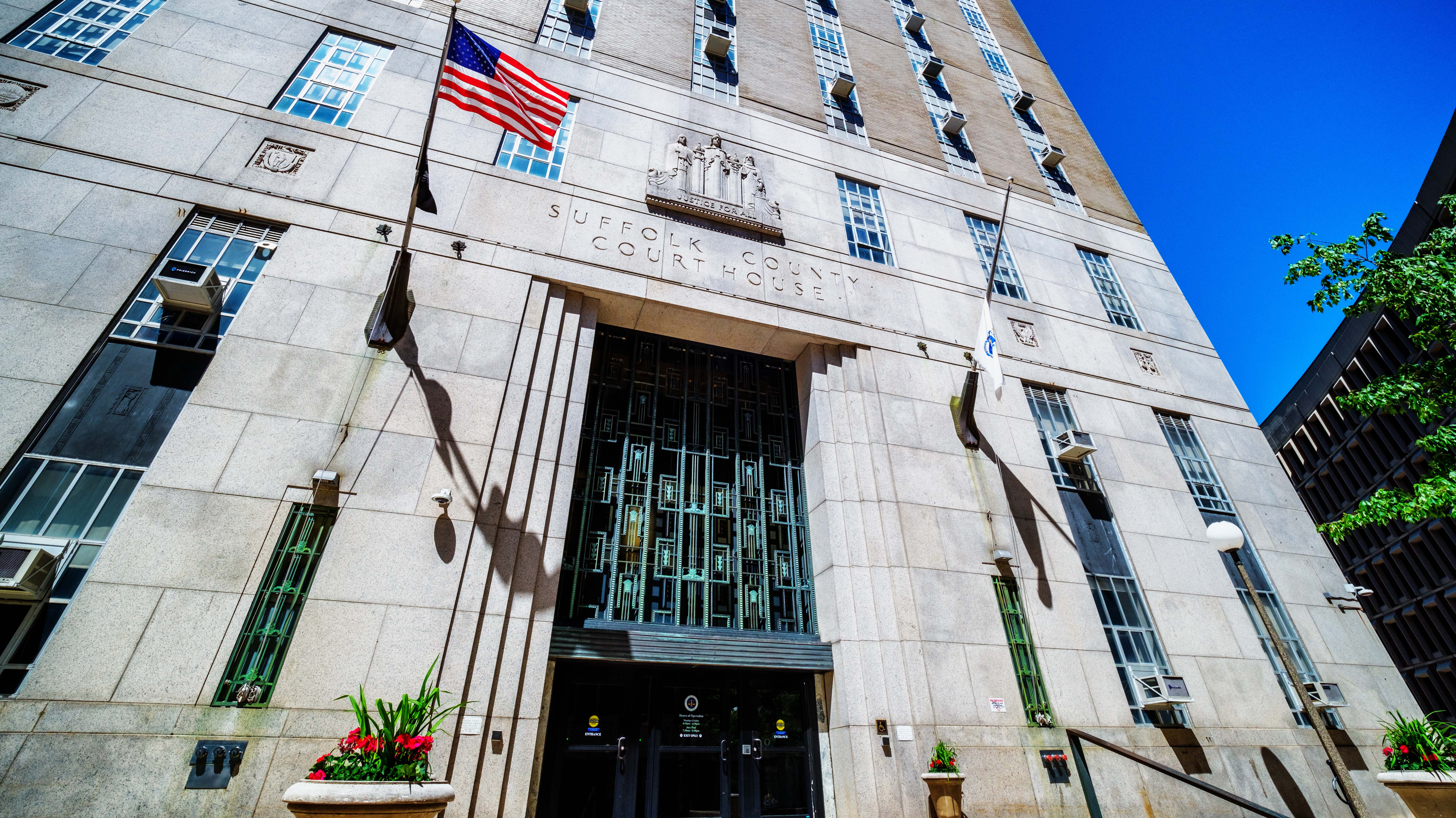
The Suffolk County Courthouse, now formally the John Adams Courthouse, houses the Massachusetts Supreme Judicial Court, the Massachusetts Appeals Court, and the Social Law Library, which is the nation's oldest law library. (Getty Images stock photo)
The full Massachusetts Supreme Judicial Court will hear Lindsay Clancy's petition to throw out her case before she is retried.
One justice decided Thursday that a "review of the merits of the defendant's petition by the full court is warranted."
Oral arguments are expected in January.
Clancy's lawyers asked Massachusetts' highest court to toss her triple murder case ahead of her March 2027 retrial in court papers filed earlier this week.
Her lawyers argue that retrying the case would violate her double jeopardy rights because the trial judge improperly declared a mistrial without questioning a holdout juror about whether he was following the court's instructions.
Prosecutors had opposed the appeal, which Clancy’s lawyers filed earlier this week.
Judge William Sullivan had previously rejected Clancy's argument that being retried on the same charges would violate her double jeopardy rights, concluding that the court acted properly by limiting the inquiry into a holdout juror on the case.
Sullivan concluded that any further questioning of that holdout juror "would undoubtedly have a coercive effect."
Sullivan also rejected a series of requests from Clancy's team to access records related to the holdout juror, including court records from jury selection and deliberations as well as the holdout's phone records.
"Relief under [state law] is extraordinary, and this court will exercise its supervisory power under the statute only in 'the most exceptional circumstances,' and when 'there is no other adequate, alternative remedy,'” the justice wrote.
Clancy, whose attorneys said she was suffering from postpartum psychosis at the time, previously pleaded not guilty to three counts of first-degree murder in connection with the deaths of her three children at the family's home in Duxbury, Massachusetts, in January 2023.
Her first trial was declared a mistrial in September after the jury said it could not reach a unanimous verdict following seven days of deliberations.
In court papers, Clancy's lawyers renewed their argument that the judge who oversaw the case improperly declared a mistrial without questioning the holdout juror about whether he had reasonable doubt about the guilt of the Massachusetts mother.
"Respectfully, contrary to the trial court's stated belief at the time, it did have viable choices other than declaring a mistrial," Clancy's lawyers argued in their appeal to the Massachusetts Supreme Judicial Court.
Clancy's lawyers appealed a decision from Judge William Sullivan last week rejecting their motion to dismiss on double jeopardy grounds. Days after issuing that ruling, Judge Sullivan scheduled her retrial to begin on March 29. Prosecutors have not explicitly said what charges they will pursue but suggested it would be the same first-degree murder charges she faced during her initial trial.
"I feel bad for Lindsay. I feel bad for her family. I feel bad for the jurors that haven't been picked yet. I feel bad for everybody that has anything to do with this case. It's very emotional, it's very distressing, but nevertheless we got to get it done," defense attorney Kevin Reddington said outside the court on Monday after prosecutors said they would pursue a retrial.
Clancy's lawyers asked a single justice of the appeals court to hold oral arguments, then report the issue to the full court for consideration. Appeals of first-degree murder cases in Massachusetts directly go to the Supreme Judicial Court, bypassing the state's mid-level court.
"Any successive trial, currently scheduled to begin on March 29, 2027, would violate Ms. Clancy's Double Jeopardy rights," Clancy's lawyers argued.
In their 55-page appeal, Clancy's lawyers argued that the outcome of questioning the holdout juror -- whether it would have led to his removal or not changed the outcome of the case -- does not matter, and that the question before the court is whether the trial judge erroneously declined a viable option.
"Without inquiry, there can only be guesswork, which does not satisfy the high standard of manifest necessity," they wrote.
Before a mistrial was declared in September, her defense attorney Kevin Reddington filed a last-minute emergency appeal to the same court, which declined to intervene.
Clancy's retrial is scheduled to begin on March 29. Her lawyers have vowed not to seek a stay of the case during their appeal, in part to ensure the case is heard by the same judge before he retires.
Signage at the JPMorganChase & Co. headquarters in New York, Nov. 13, 2026. (Bloomberg via Getty Images)
JPMorganChase said Thursday morning that "third parties who provide services" to the banking giant "were the target of a cyberattack."
"Based on our investigation so far, we believe the attackers accessed certain marketing data held by those vendors, which may include some customer names and email addresses," the statement continued.
"There is no disruption to our services," according to the statement.
JPMorganChase, the largest U.S. bank, did not disclose when the cyberattack occurred or name the third-party companies that were targeted.
"Where appropriate, we will contact affected customers directly and offer support, including complimentary credit monitoring," the company said in its statement.
The company added that it found "no connection to service disruptions some customers experienced earlier this week."
JPMorganChase said on Monday that it experienced technical issues that triggered online delays across several major U.S. banks. Chase blamed the outage on a "software bug."
There have been several recent tech outages across the nation that affected air travel, email and hotel reservations, and even slowed classified internal communications at the National Security Agency.
Top Trump administration officials continued this week to insist that there is no evidence that those outages were the result of cyberattacks.
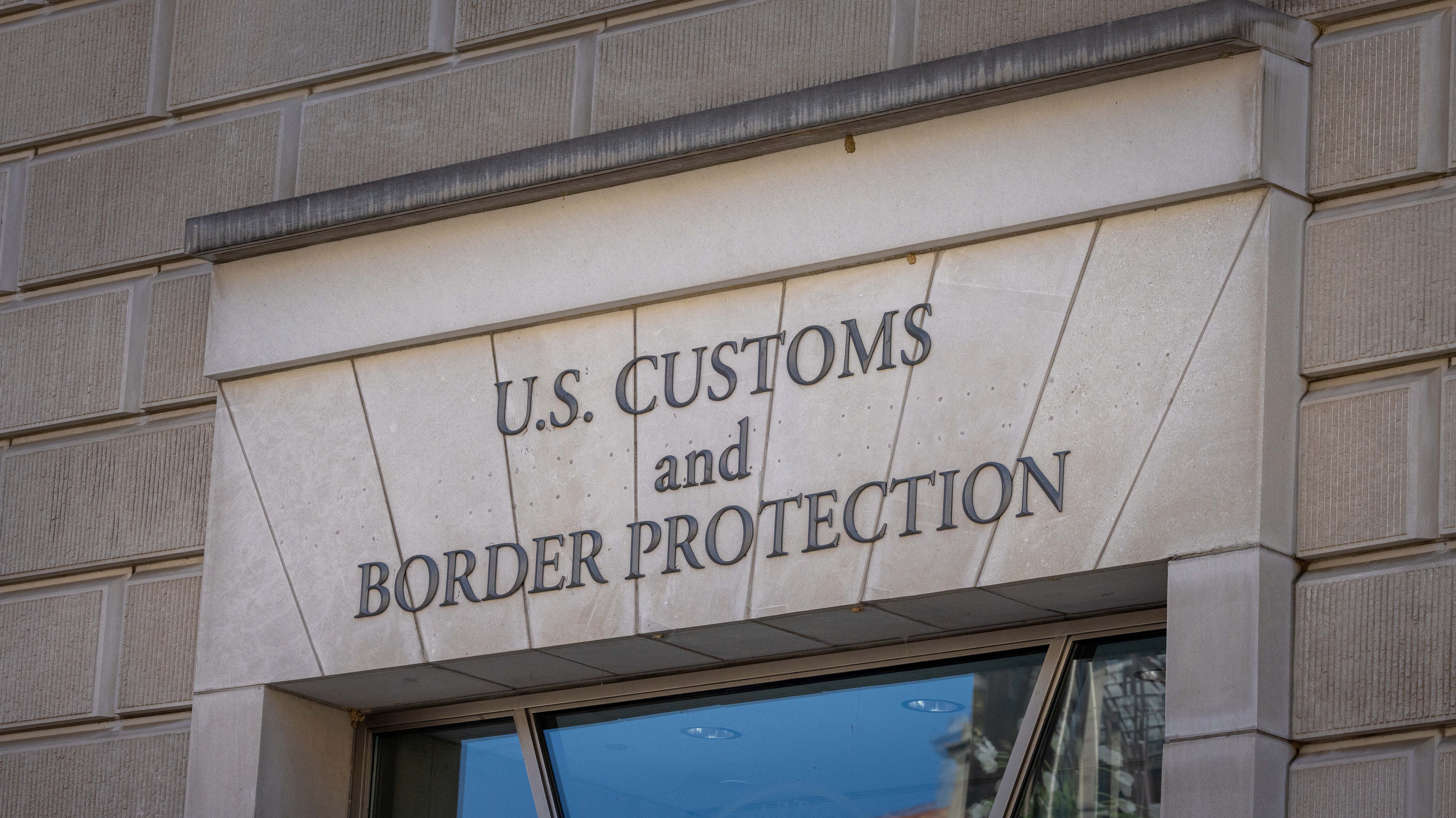
The headquarter entrance of the United States Customs and Border Protection building in Washington, D.C. (Getty Images stock photo/Greggory DiSalvo)
Federal auditors warned Thursday that Immigration and Customs Enforcement is spending billions of dollars to expand immigration detention without "determining the cost effectiveness" of new initiatives or keeping its spending plan up to date.
A new report released by the Government Accountability Office examined how ICE has managed the $45 billion in detention funding provided under the One Big Beautiful Bill Act.
"A January 2025 Executive Order directed DHS to increase efforts to detain individuals apprehended for violations of immigration law and to allocate all available resources for ICE detention," according to the report. "ICE received significant funding in July 2025 to operate and expand detention facilities."
According to GAO, ICE acquired 11 warehouses to be converted into immigration detention centers for about $1.07 billion before scaling back the initiative and planning to sell seven of them. The facilities ranged in cost between $35 million and $145 million.
For nine of the warehouses, ICE paid at least 50 percent more than the state or local government assessment of taxable value, auditors found. In one example, the agency purchased a warehouse in Social Circle, Georgia, for about $128.6 million after a previous buyer purchased it in 2023 for about $29.4 million.
"Our analysis of ICE documentation and public records showed that ICE potentially overpaid for many of the warehouses it purchased," auditors wrote. "Moreover, given ICE's plans to sell seven of the warehouses -- six for which it paid at least double the assessed value -- there is risk that these sales could result in financial losses to the federal government."
In July and August 2026, ICE also bought four existing detention facilities for about $2.2 billion total.
Auditors also pointed to high-cost detention operations on military bases. ICE has obligated more than $1 billion to Camp East Montana on Fort Bliss.
"ICE obligated over $1 billion to one facility, Camp East Montana, representing 36 percent of total obligations to detention facilities in the first three quarters of fiscal year 2026," auditors wrote. "We previously reported on cost efficiency concerns related to contract design and administration at Camp East Montana."
And the Guantanamo Bay Naval Base in Cuba, ICE and the Defense Department obligated roughly $111 million for two facilities despite an average daily population of fewer than 30 detainees. ICE previously said it would use Guantanamo Bay to hold "high-threat noncitizens" but has held "multiple noncitizens who had no criminal convictions or pending charges," auditors wrote.
According to the report, ICE plans to continue using Guantanamo Bay "based on direction from senior leadership and the White House."
GAO recommended that "ICE update its spending plan for detention funding in accordance with internal guidance, and develop life-cycle cost estimates, in coordination with DHS, before making new detention investments."
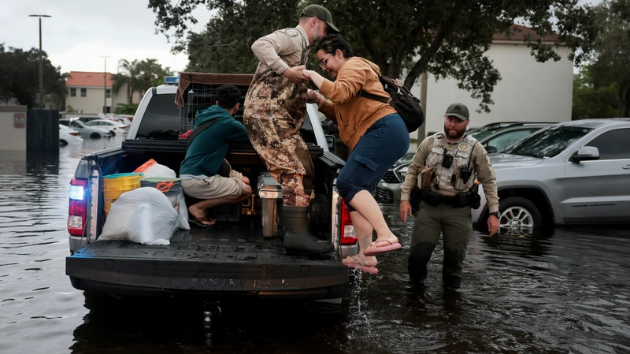
Capt. Jeff Carroll, a law enforcement officer from the Florida Fish and Wildlife Conservation Commission, helps Marian Lopez evacuate as floodwaters inundate the neighborhood on November 18, 2026 in Hollywood, Florida. (Photo by Joe Raedle/Getty Images)
Parts of Florida have seen more than a foot of rain over the past two days, with additional heavy rainfall expected Thursday and Friday as flooding has cut off some neighborhoods and sent water into homes.
Plantation, Florida, has recorded 16.4 inches of rain, while Hollywood has seen 13.8 inches and Fort Lauderdale has received 12.2 inches.
The St. Johns River near Cocoa has risen above record levels, reaching 17.8 feet. Neighborhoods in Cocoa and Rockledge have been cut off by feet of standing water, with vehicles abandoned and water entering homes.
Additional rounds of heavy rain are expected Thursday and Friday, including a Level 2 out of 4 flood threat in place Thursday from Miami to Jacksonville. On Friday, that threat shifts slightly north, covering the area from West Palm Beach to Jacksonville.
A Level 3 out of 4 flood threat is in place over Florida's Space Coast both days. On Thursday, it extends from Port St. Lucie to Daytona Beach, while Friday's threat covers the area from Palm Bay to Orlando.
In areas where heavy rain persists for hours, rainfall totals could reach 6 to 12 inches and, on Saturday, the system responsible for the flooding in Florida is expected to begin moving north as a more organized low-pressure system takes shape off the coast.
A Level 2 out of 4 flood threat is forecast from Daytona Beach to Charleston on Saturday, where rounds of rain could become heavy at times.
The storm system could also take on tropical characteristics as it moves up the coast, with the National Hurricane Center giving it a 60% chance of developing into a tropical or subtropical system this weekend.
If it becomes a named tropical storm, the next name on the list would be Kyle.
Regardless of whether it receives a name, the system is expected to have nor'easter characteristics and bring strong winds to the coastline this weekend. Impacts could include localized major beach erosion, minor to moderate coastal flooding and rainfall that could cause urban flash flooding at times.
The exact track remains uncertain because the system has not yet developed. Its path will depend in part on how it interacts with frontal boundaries in the region.
On Sunday, North Carolina and Virginia could see heavy rain, strong winds, coastal flooding and beach erosion.
By Monday morning, rain could reach the New England coast before moving out during the afternoon.
The controlled detonation of nearly 10,000 pounds of lead azine at a U.S. Army plant in Iowa has been postponed until early next week, Army officials announced Thursday, a day before the planned blast.
"Public safety is the Army’s top priority, and I have directed Army Materiel Command to postpone tomorrow’s controlled detonation at the Iowa Army Ammunition Plant in Middletown, Iowa until Monday, November 23," Army Secretary Adam Telle said in a post on social media.
Two rapid, controlled detonations were scheduled to take place at the Middletown plant midday Friday to safely dispose of degraded lead azide, according to the U.S. Army.
Telle said Monday is the "latest possible moment prior to a forecasted temperature drop, which would risk further destabilization of the material."
His announcement comes hours after two environmental groups asked a federal court to halt the plan -- alleging that the U.S. Environmental Protection Agency approved a permit for the detonations without adequately considering the potential health and environmental consequences or fully evaluating alternatives -- as some officials also expressed concerns about the Army's plan, how it was communicated to the public and risk of potential lead exposure.
"Public communication is essential to public trust. Therefore, the Army will continue to actively engage with state and local officials throughout the region to distribute accurate, up-to-date information," Telle said Thursday.
Republican Iowa Sen. Chuck Grassley said on social media that he raised concerns and questions about the controlled detonation with the Army and "emphasized the need for increased communication," and that the delay is "to further educate the public."
Here's what to know about the operation.
How the barrels will be detonated
Sixty-eight barrels -- approximately 9,700 pounds -- of the explosive material are set to be detonated, according to Army Sustainment Command spokesperson Justine Barati.
The detonation was initially scheduled to occur at approximately noon CT Friday, the Army said in a public advisory on Wednesday. A time for Monday's detonation has not yet been announced.
The barrels will be detonated "inside earth-covered magazines made of concrete: and surrounded by two-story-high sand barriers, the advisory said.
"Before and during the detonation, the soil above the earth-covered magazines will be thoroughly saturated with water, and water misters will be spraying," the advisory said. "These measures should reduce the amount of lead that migrates from the detonation through the air off the installation."
Expected blast impacts as residents asked to evacuate
The blast is expected to result in loud noises and ground vibrations, as well as a dust plume "that will contain some lead" and is expected to linger for up to one hour, depending on wind speed, the Army said.
The Army will be updating plume maps up until and after the detonation, Barati said. Ahead of the operation, the Army released maps on potential airborne exposure to toxic lead dust via the air and on surfaces, which it said are being updated before and after the detonation.
"The U.S. Army has taken extraordinary measures to mitigate the plume by following strict permit requirements set by the EPA such as earthworks, soil wetting, and air sampling," the Army said in a public advisory earlier this week.
The blast could also break windows. Due to that risk, the Army said it had asked residents near Middletown City Park and Butterfly Park to temporarily evacuate the area for several hours before and after the scheduled detonation "out of an abundance of caution." Updated guidance in light of the postponement has not yet been released.
Middletown, which is located near the Iowa-Illinois border in southeastern Iowa, has a population of nearly 400 people, according to U.S. Census data.
Residents who need a place to stay were invited to the Armed Forces Reserve Center. Those who couldn't evacuate were advised to stay indoors and keep all windows and doors closed during the possible exposure period.
People were also being advised to clean play surfaces for children and windowsills once the U.S. Army determines the air exposure period has ended.
In addition to air monitoring during the blast, sampling will occur afterward to "identify material that may need to be cleaned up," the Army said.
"A large 'safe zone' area has been identified and extends well beyond the area that the blast can reach," the Army said. "Fire and emergency responders will be staged and on standby to respond to an emergency if needed."
Multiple school districts planned to close
Lead exposure is a particular concern for young children. According to the U.S. Centers for Disease Control and Prevention, there is no safe blood lead level for children. Even low blood lead levels "are associated with developmental delays, difficulty learning, and behavioral issues," the CDC said. Many children with lead in their blood will not show symptoms immediately after an exposure. Parents concerned about lead exposure should speak with their child's primary care provider about lead level testing.
Due to the controlled detonation, multiple school districts in the area planned to close their doors on Friday out of an abundance of caution. They included the Burlington Community School District, which serves Middletown, as well as Mediapolis, Columbus, Danville and Winfield Mt. Union. The schools have yet to issue updated plans in the wake of the detonation's postponement.
Destroying in place 'only responsible option'
The controlled detonation is to dispose of the degraded lead azide, which is highly sensitive and extremely unstable, the Army said. Due to the risks of accidental detonation in packing and transporting it, "safely destroying it in place is the only responsible option," the Army said.
Lead azide is the primary explosive used to initiate munitions.
According to the EPA, which permitted the detonation, the "recrystallization of the stored lead azide has increased the material's sensitivity to friction and shock, and disturbing the containers of lead azide could create an unacceptable risk of unintentional detonation."
The Iowa Army Ammunition Plant makes medium- and large-caliber munitions for the Department of Defense.
Emergency motion seeks to stop detonation
The day before the planned detonation, the Iowa Environmental Council and Sierra Club filed an emergency motion, seeking a stay of the EPA-issued permit authorizing the detonation.
The filing argues that the detonation could spread lead dust across a large area, potentially reaching communities more than 100 miles from the plant. The Army's latest modeling projects that lead dust could settle across an area approximately 25 miles long and 5 miles wide, including homes and waterways, according to the filing. The groups further argue that people, livestock and wildlife could also continue to face exposures to lead once it settles into the ground.
The filing also questions the Army and EPA's handling of public notification, alleging that some of the potentially impacted communities were not given direct or timely notice.
The groups asked the federal appeals court to rule by 10 a.m. CT Friday, right before the detonation was initially scheduled to occur.
Prior to the detonation's postponement, Iowa Sen.-elect Josh Turek and Gov.-elect Rob Sand, both Democrats, also criticized the communication from the Army while calling for Friday's detonation to be paused.
"An unacceptable lack of communication and clarity has made Iowans understandably concerned and angry about this situation," Sand said in a statement on Thursday. "The public deserves to know, if this is the safest option, why other options were worse. If it isn't as safe as possible to do this tomorrow, it shouldn't happen tomorrow."
ABC News has reached out to the Army and EPA for comment on the emergency motion and has not yet received a response.
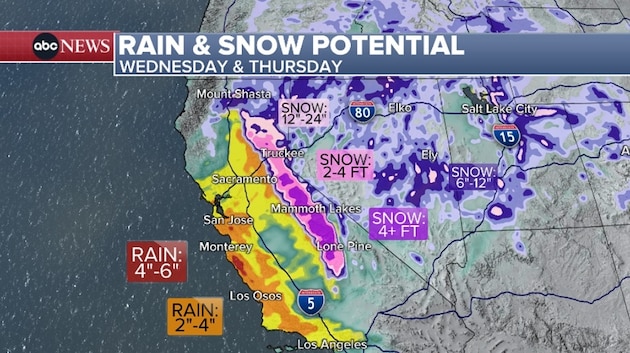
A massive storm hit the San Francisco Bay Area and other parts of California hard Wednesday, inundating streets, knocking down trees and scattering debris throughout the day.
The heaviest rain hit the Bay Area Wednesday morning, with some streets so flooded that water spilled back out through storm drains.
That batch of heavy downpour is moving down the California coast toward Monterey and San Luis Obispo through Wednesday evening and then onto Santa Barbara and Los Angeles overnight into early Thursday.
Waymo, the autonomous taxi company, announced Wednesday that it paused service in the Bay Area due to the weather.
"Safety is Waymo’s top priority, both for our riders and everyone we share the road with," the company said in a statement.
The torrential weather is forecast to continue throughout the state, with flash flooding possible along the entire Central and Southern coastline Thursday.
On Thursday morning, heavy rain is forecast to hit the L.A. area, along with more rain for the Bay Area and Sacramento.
The areas most susceptible to flooding will be around burn scars from past wildfires where debris flow and mudslides are possible through Thursday.
Locally, two-to-four-inch widespread rain is possible from San Jose to L.A. County, with higher volume in elevated areas.
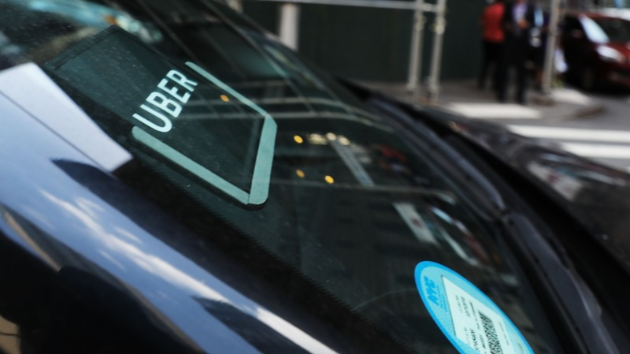
An Uber car waits for a client. (Photo by Spencer Platt/Getty Images)
An Uber passenger was charged with attempted murder and carjacking after he allegedly strangled his driver with a seatbelt, ran him over with the car and left him in a ditch last weekend, according to prosecutors.
Samit Apurva Patel, 25, was charged with second-degree attempted murder and carjacking on Tuesday after he allegedly attacked his Uber driver and took his car, according to an order for detention filed in Minnesota District Court.
The Uber driver, identified by officials as Mohamed Yusuf, suffered multiple severe injuries, including broken ribs, a broken leg, spinal injuries, collapsed lungs and significant internal bleeding from several organs that had to be removed, according to the order.
Yusuf continues to fight for his life, but his prognosis is poor, according to the order.
Patel's alleged attack on the driver followed the driver telling him his name was "Mohamed." Patel responded by saying, "I don't like that name," according to the order.
"I can't imagine the anguish of knowing that a beloved member of your community may have been targeted because of their name. The environment for our Somali neighbors in our state is absolutely frightening," Hennepin County Attorney Mary Moriarty said during a press conference Tuesday.
Moriarty said the rhetoric of those who "eagerly demonize an entire community of our neighbors" is dangerous.
"To those who continue to engage in the type of rhetoric that is just cruel, inhumane, that 'other-izes' is our Somali community members, please stop. Please stop. It's completely uncalled for, and it causes extreme harm," Moriarty said.
While Minnesota does not have a hate crime statute, it does have a sentencing enhancement for crimes motivated by bias that needs to be proven without reasonable doubt, according to Moriarty.
"After our analysis of the evidence, we reached broad consensus that we are not able to prove that this assault was motivated by bias," Moriarty said at a press conference Tuesday.
"This charging decision does not mean that Mr. Patel has no bias or prejudice towards other groups, our decision does not diminish the pain that the family and the Somali community is feeling right now. Instead, it reflects what can be proven without a reasonable doubt at trial," Moriarty said.
Moriarty said that under the First Amendment, prosecutors cannot charge someone who may hold biased beliefs.
"We do have the tools, even if we're not charging under the statute, to get a sentence that we feel captures the gravity of what happened here, if he should be convicted," she said.
Uber said it has banned the rider from its platform.
"We are shocked and horrified by the details of this senseless attack. We banned the rider from the Uber platform and are keeping the driver and his loved ones in our thoughts as we continue to support law enforcement with their investigation," an Uber spokesperson told ABC News in a statement.
Defendant’s parents request wellness check
Patel's parents called police for a health and wellness check on Saturday after he allegedly returned home intoxicated and was showing signs of emotional distress and belligerent behavior following the alleged attack on Yusuf, according to the order for detention.
Patel also allegedly expressed "fear regarding a strange vehicle that was parked outside their house in the middle of the street," according to the order for detention.
When they arrived on the scene, officers found a vehicle outside the callers' residence that was unoccupied and running with the driver's door partially open. There was also significant damage to the driver's side front of the vehicle and the rear bumper, according to the order for detention.
The driver's side interior was covered in dirt, debris, burs and a single shoe, and the driver's side seatbelt was hanging out of the door and appeared damaged or torn, according to the order.
Investigators later determined this was Yusuf's vehicle, according to the order.
Patel was allegedly visibly distressed and intoxicated, asking officers to arrest him, and appeared visibly afraid of something, according to the order.
Patel initially claimed the vehicle outside was his before acknowledging it wasn't, telling officers he had gone out drinking with friends for a birthday and took an Uber home, but he claimed he did not know where his Uber driver was, according to the order.
Other responding officers discovered another phone in the vehicle that was connected to a phone call with the victim's brother, who is also an Uber driver, and had been on the phone because the two like to talk to each other while they drive, according to the order.
Patel then asked the Uber driver to make a turn and not go to his house. Shortly after, the victim's brother heard the Uber driver screaming in Somali, saying things like "he kill me," "oh my god," and "I'm dead," the driver's brother told investigators, according to the order.
At one point, Yusuf said "he is choking me with a belt," the driver's brother told investigators, according to the order.
A struggle between the two lasted a couple of minutes, but then there was silence, the driver's brother reported. Then, the victim's brother could hear him screaming, "Oh my god he was driving the car on top of me, he was running me over," the order said.
The victim's brother said he could then only hear the passenger and when he asked to speak to his brother, Patel allegedly responded with an expletive, according to the order.
Officers learned the victim had a smartwatch and were able to use it to track his location and then used a police drone to locate his heat signature. The driver was found lying in a patch of burs and plants in a ditch off the side of the road. He was taken to a hospital with numerous severe injuries, according to the order.
Officers also found tire tracks leading off the road into the ditch area where the victim was found and tire tracks leaving the ditch, according to the order.
Patel is in custody and being held on a $1 million bond without conditions or $800,000 with conditions, including electronic monitoring and not leaving Minnesota without written court approval, according to court records.
His next court hearing is on Dec. 12, according to court records.
An attorney for Patel did not immediately respond to ABC News' request for comment.
A paramedic responding to the scene of a deadly accident involving a vehicle "experienced every parent's worst nightmare" when she discovered that the victim was her own son, according to authorities in Utah.
Logan Mumford, 28, of Sigurd, Utah, suffered traumatic injuries when a car he had been working on fell on top of him, according to a joint press release from the Sevier County Sheriff's Office and Sevier County Emergency Management.
The father of two was helping his neighbor fix her car in her garage Monday evening when the accidental death occurred, authorities said. He had been trying to gain access to the alternator when the car jack "suddenly gave way, trapping him beneath the vehicle," the press release stated.
Responding deputies helped pull Mumford, who had significant trauma to his head, out from under the vehicle and first responders attempted live-saving measures, authorities said.
One of the paramedics who responded to the scene was his mother, Tricia Mumford, according to authorities.
"It was not until she heard his name that it was realized it was her own son," the press release stated.
The mother "did everything she could to save his life" alongside other first responders, as Mumford's wife watched, authorities said.
Mumford was transported from the scene via helicopter to Utah Valley Medical Center, where he died from his injuries, authorities said.
"As first responders, we prepare ourselves to respond to some of life's most devastating situations. We train for the unthinkable, and we answer the call when others need us most. But no amount of training can prepare a mother to respond to an emergency involving her own child, or a wife to watch as the person she loves fights for his life," Sevier County Emergency Management said in a statement Tuesday. "Behind every emergency call is a family, a story, and a community forever changed. Last night, this tragedy became far too personal for one of our own."
Mumford was the father of two young children, a 3-year-old boy and a 1-year-old girl, authorities said.
His final moments helping his neighbor was "just one more example of the kind of person he was: someone who was always willing to lend a hand and help others," Sevier County Emergency Management said.
Gov. Kathy Hochul during the New York gubernatorial debate at Spectrum News NY1 studios on Oct. 13, 2026. (Pool/Getty Images)
New York Gov. Kathy Hochul is demanding information from Immigration and Customs Enforcement and a Virginia-based construction company about a new tent immigration detention facility set to house women.
In letters released Wednesday by Hochul, two New York state agencies are pressing for information on the soft-sided facility in Batavia, New York.
The site is an addition to the Buffalo Service Processing Center, which is the largest immigration detention center in New York and currently only holds men.
According to the letters released by Hochul, the tent facility in New York is set to house up to 100 women. The detention center is being constructed by the firm Akima Infrastructure Protection amid the Trump administration's ongoing immigration crackdown.
In the letter, the New York State Department of Environmental Conservation and the state's Department of Health pointed to federal laws to argue that ICE failed to coordinate or conduct proper environmental consultations and public notifications before construction began.
The New York state agencies requested a response by next week to questions about facility conditions, medical care, food and construction.
In a statement to ABC News, a spokesperson for DHS said it "should not come as news that ICE will be making arrests in states across the U.S. and is actively working to expand detention space."
"ICE is targeting criminal illegal aliens including murderers, rapists, gang members and more," the spokesperson said. "Thanks to the Working Families Tax Cuts Act, ICE has new funding to expand detention space to keep these criminals off American streets before they are removed for good from our communities."
In documents previously released by New York lawmakers last month, DHS Secretary Markwayne Mullin said in a letter the contract supports the Buffalo area through "the expansion and provision of detention services for illegal aliens."
Mullin said in his letter that the tent facility is expected to cost about $8.7 million.
The letters released by Hochul on Wednesday follow concerns raised by lawmakers and immigrant advocates about conditions at other soft-sided facilities.
The facility known as "Alligator Alcatraz," a soft-sided detention center in Florida, was closed earlier this year following lawsuits and pressure from lawmakers. When the closure was announced, Florida and ICE officials said the facility was meant to be temporary.
An inspector general report in September found that some detainees at the Florida facility were confined to small metal enclosures, presenting "significant risks" to their health and safety.
The largest immigration detention center in the U.S., Camp East Montana in Texas, is also a soft-sided facility. Human rights organizations and advocacy groups have raised concerns and have filed lawsuits alleging detainees face medical neglect, a lack of adequate food and water, and prolonged confinement in windowless tents.
"Federal oversight agencies have documented unsanitary conditions, gaps in medical services, and deficiencies with clean water access at tent immigration detention facilities in Texas and Florida," wrote the commissioners of the two New York agencies.
Tony Rice, a cybersecurity professional in Beloit, Wisconsin, said he first became aware that his identity had been stolen in late 2025. (ABC News)
Federal investigators say they are escalating their sprawling probe into so-called "ghost students" -- digital thieves who steal Americans' identities and use them to defraud the government out of student loans and financial aid, leaving taxpayers, the identity theft victims and unwitting schools to pick up the pieces.
The Justice Department last month announced "Operation Ghostbusters," the nationwide probe into criminal rings siphoning hundreds of millions of dollars from tuition aid programs. But the scope of that ongoing investigation -- led by the FBI and U.S. Department of Education's inspector general -- is now coming into clearer focus.
Heith Janke, the assistant director of the FBI's criminal division, told ABC News that almost half of the FBI's 55 field offices across the country are now actively pursuing cases associated with "ghost students," and the FBI is already aware of 830,000 fraudulent student aid accounts that have stolen more than $130 million.
The FBI has already launched 47 separate investigations tied to the scam, with each case potentially involving multiple suspects, Janke said. And, Janke pledged, it's just the beginning.
"We are just getting started when it comes to ghost students," Janke said. "While we've had the success in getting those initial cases, we are not stopping ... we will trace the money, we will find it, and we will seek accountability from them."
ABC News and ABC-owned stations previously examined the growing scam, which officials say has cost the federal government hundreds of millions of dollars each year, leaving an untold number of victims in its wake.
Last month, the Justice Department announced the first tranche of charges as part of "Operation Ghostbusters," targeting five individuals who allegedly participated in "ghost student" schemes. One of those now facing charges is Francis Mogambi, a 23-year-old Kenyan national living in Lincoln, Nebraska, who prosecutors allege helped steal the identities of victims in Wisconsin, Ohio, Virginia and New York.
One of Mogambi's alleged victims was Tony Rice, a 33-year-old cybersecurity professional in Beloit, Wisconsin.
Rice said he first became aware that his identity had been stolen late in 2025, when an investigator in Nebraska contacted him with alarming news: International criminals had stolen his identity and enrolled him in college. Rice said he later learned that the fraudster had applied for about $10,000 in student loans, leaving Rice on the hook to either pay the money back or have the loans removed from his credit.
"I found out that the actual student loan was started ... in December. I find out in January," Rice told ABC News. "Well, by February, it's not getting paid, right? So that's going to impact my credit immediately."
According to court records, it was Mogambi's own roommate in Lincoln who turned him in to authorities this past April, after Mogambi allegedly tried to recruit him to join the "ghost student" scheme.
Mogambi allegedly told the roommate that he was working with two brothers in Kenya, and that after enrolling in schools and receiving checks from those schools, Mogambi then sent as much as 70% of the illicit proceeds back to the brothers.
Mogambi, who was legally in the U.S. on a diversity visa and was working as a nursing assistant, has pleaded not guilty. An attorney representing him did not reply to a request for comment.
"Ghost Students" are a scourge on American taxpayers, according to Janke, who said the schemes are particularly depraved because they largely take advantage of systems meant to increase access to higher education, including enrollment at community colleges.
"What is great about our country is the ability for people to get a secondary education, whether that is a university or a community college," Janke said. "And the fact that these fraudsters prey upon that and use that as a means to make additional fraudulent monies off Americans is when it's appalling."
Lawmakers around the country have also started to take steps to mitigate this growing scheme. In May, the Minnesota legislature passed a higher education funding bill that it says would "provide $3 million in Fiscal Year 2027 to Minnesota State for software to detect and prevent fraud involving so-called 'ghost students.'"
In Washington, D.C., the No Aid for Ghost Students bill passed the House of Representatives in June but has not yet passed the Senate. The law would require schools to implement strict verification requirements before student aid is disseminated.
Director of National Intelligence Jay Clayton said Tuesday that technical issues impacting the National Security Agency and other areas are not the result of a cyberattack or state-sponsored activity, amid cybersecurity concerns over reported outages.
"This is not a cyberattack, and this is not a coordinated effort by a nation-state," Clayton said during an interview with CNBC on Tuesday when asked about recent reported tech outages in the government and private sector.
"We've looked very closely. Anytime we see something like this, those are the first questions that we ask on behalf of the American people. And we go across and we say, 'Is that what's going on here?' That is not what's going on here," he said.
Clayton’s comments came the same day Secretary of State Marco Rubio also sought to assuage fears over recent high-profile technology failures and service disruptions, giving the Trump administration’s clearest declaration that the events are “completely unrelated” and had "nothing to do with a cybercriminal has nothing to do with a hostile actor or another country.”
"We are not under systemic attack,” Rubio told reporters.
The secretary acknowledged that the failures were “unsettling,” but said they could be blamed on run-of-the-mill computer errors.
"Each of them are distinct, and they're different in their causation,” he said.
In another interview on Fox Business on Tuesday, Clayton said he was "fairly confident" in his assertion because "we know those things exist and we have been looking for them in the past."
Clayton's comments come after an internal communications system used by NSA employees to share classified information temporarily went down on Tuesday. The NSA said the network issues occurred during "scheduled routine maintenance" and that "mission-critical capabilities remain fully operational and our ability to defend national security continues."
Clayton told Fox Business that what the administration is fairly confident has been happening is that technology systems across institutions are upgrading and "patching" where vulnerabilities have been found, including at the NSA.
"As you patch and upgrade your systems, taking them down and bringing them back up, there are things like this that happened," he told CNBC.
"We will have other patches going forward as we upgrade our infrastructure. But this is not something that is a coordinated cyberattack or a state-sponsored effort against the U.S.," he continued.
Clayton, who also chairs the White House Super Intelligence Force (the Trump administration's term for artificial intelligence), told Fox Business that AI is able to scan systems "more quickly," and as a result, "the ability to identify vulnerabilities has increased."
"That is why it is so incumbent upon all of us to work together, to patch, to report vulnerabilities," he said.
Sen. Mark Warner, D-Va., vice chairman of the Senate Select Committee on Intelligence and co-chair of the Senate Cybersecurity Caucus, echoed Clayton's remarks in a statement on Tuesday.
"I understand why Americans are concerned about the widespread outages we've seen in recent days, affecting everything from banks and major technology companies to critical government systems. At this point, there is no indication that these incidents are the result of a cyberattack, foreign interference, or some coordinated effort," he said.
Warner also pointed to artificial intelligence, saying AI is "making it possible to identify vulnerabilities across enormous numbers of systems at unprecedented speed, creating enormous pressure on companies and government agencies to patch those vulnerabilities immediately, often all at once, putting tremendous strain on systems that weren't built to handle that pace of change."
"While we still need to get to the bottom of these incidents, the evidence so far points toward legitimate efforts to secure our systems, not malicious activity," he said.
GEO Group, the private prison company that runs the Delaney Hall Detention Facility in New Jersey as one of dozens of immigration detention centers it operates nationwide, has for months failed to comply with a subpoena issued by New Jersey Attorney General Jennifer Davenport, a new lawsuit says.
The allegation is laid out in a lawsuit filed Tuesday by Davenport that seeks to compel the company to comply, if a judge deems that it violated the law by failing to respond.
According to the complaint, the New Jersey attorney general's office issued a subpoena to GEO Group in August as part of a probe into the medical treatment ICE detainees are receiving at Delaney Hall. The state is investigating potential civil and constitutional rights violations after at least three people have died at the facility during the Trump administration's immigration crackdown.
GEO Group failed to comply with the subpoena, claiming that it needed permission from the Department of Homeland Security to do so, the complaint says. Although the state attorney general's office does not believe the company needs DHS' authorization to comply, the AG's office says it has repeatedly asked DHS to do so, according to the complaint.
"These repeated inquiries have been met with silence. Not only has DHS failed to authorize the production of any information, but it has refused even to confirm whether it will or will not authorize GEO Group to produce responsive material," the complaint says.
In a statement, Davenport's office said the failure to comply with the subpoena amounts to "a pattern of stonewalling any efforts to examine conditions inside Delaney Hall."
A Department of Homeland Security spokesperson said in a statement, "ICE is regularly audited and inspected by external agencies. ICE is committed to transparency, and the Delaney Hall detention facility complies with all required state and local laws. All detainees are provided with proper meals, quality water, blankets, medical treatment, and have opportunities to communicate with their family members and lawyers."
A separate lawsuit filed by Davenport's office in June accuses GEO Group of refusing to provide health inspectors full access at Delaney Hall.
Waymo was ordered, Nov. 11, 2026, by the California Department of Motor Vehicles to keep its cars off the state's freeways after authorities said the driverless vehicles were involved in several dangerous incidents. (Heather Diehl/Getty Images)
The state of California has slapped a temporary freeway ban on Waymo's autonomous cars amid a series of troubling incidents, including one where three of the company's driverless cars entered an active freeway construction zone.
The California Department of Motor Vehicles ordered Waymo on Nov. 11 to stop operating its cars on state freeways until the company takes corrective action to prevent further dangerous situations from occurring.
"The Department determined that Waymo's driverless freeway operations pose an imminent hazard to public safety due to recurring incursions by its vehicles into active construction zones where construction workers, vehicles and equipment are present," the DMV said in a statement.
The DMV specifically noted two recent incidents in which Waymo cars posed hazards.
Earlier this month, a Waymo car attempted to pass California Highway Patrol vehicles attempting to create a blockade on Interstate 280 in the Bay Area, the DMV said.
In another recent incident, three Waymo vehicles entered an active construction zone on Highway 101 near the Bay Area city of Burlingame, putting workers and equipment at risk, according to the DMV.
The DMV said the incident occurred "despite prior restrictions and corrective actions implemented following similar incidents."
In May, Waymo temporarily paused its freeway operations in several cities, including San Francisco and Los Angeles, to improve how its autonomous cars respond in construction zones.
Before Waymo is allowed to resume freeway operations this time, it must provide sufficient evidence that its vehicles can safely detect and respond to construction zones, emergency vehicles, and other roadway situations, according to the DMV.
In a statement to ABC News, Waymo said, "Safety is at the foundation of everything we do," and noted that no injuries or collisions resulted from the recent incidents involving its cars that were flagged by the DMV.
"In alignment with our safety-first principles, we have also temporarily restricted freeway operations across our other operating markets to evaluate our performance," according to Waymo's statement.
The company said its ride-hailing service will continue on surface streets.
"We are working with the California DMV and other state officials diligently and responsibly to resume freeway operations," Waymo said.